
Safety Shower & Eye Wash Station Compliance: Are You Meeting Australian Standards?
Safety Shower & Eye Wash Station Compliance: Are You Meeting Australian Standards?
Walk into any chemical processing facility, laboratory, or industrial workspace across Australia, and you will likely spot the familiar sight of a safety shower or eye wash station tucked into a corner. These pieces of emergency equipment often sit quietly in the background until the moment they are desperately needed.
But here is the reality: installing a safety shower or eye wash station is only half the job. The bigger question is whether your workplace is actually meeting Australian Standard AS 4775-2007, and whether your team is trained to use the equipment correctly when every second counts.
Understanding AS 4775-2007: The Australian Standard for Safety Showers and Eye Wash Stations
The Australian Standard AS 4775-2007 sets the minimum safety requirements for emergency showers and eyewash equipment. It outlines how workplaces must install, maintain and position emergency decontamination equipment to ensure effective response to chemical exposure.
This standard covers equipment design and performance, installation requirements, weekly testing procedures, water temperature and flow rate expectations, and the accessibility needed for workers to respond safely.
Key AS 4775-2007 Requirements Workplaces Often Miss
Location and Accessibility
Safety showers and eye wash stations must be accessible within 10 seconds from any hazard point, which is roughly 30 metres of unobstructed travel. The path must be straight, clear, unlocked and without steps or obstacles. When a worker’s eyes or skin are exposed to hazardous chemicals, those 10 seconds matter.
Water Flow and Temperature
The standard specifies exact flow rates. Eye wash stations must deliver at least 1.5 litres per minute. Eye and face wash units require 11.4 litres per minute. Safety showers must deliver a minimum of 75 litres per minute. Water must be between 15 and 38 degrees Celsius so it does not cause shock or worsen chemical burns.
Testing and Maintenance
AS 4775-2007 requires weekly activation tests for plumbed units, regular checks to confirm flushing fluid is available, documented maintenance records and immediate correction of any issues identified. Weekly testing ensures valves, nozzles and water flow function as required in an emergency.
The Cabinet Question: Chemical Storage and Prevention
While AS 4775-2007 focuses on safety showers and eye wash stations, workplaces also need safe and compliant storage for the hazardous materials that make this equipment necessary.
Ecospill’s dangerous goods storage cabinets, including flammable liquid cabinets and corrosive substance cabinets, help minimise the risk of chemical exposure by providing correct containment, ventilation and hazard signage. Good storage supports good emergency preparedness by reducing the likelihood of spills and contamination.
Portable Eye Wash Stations for Worksites Without Plumbing
Not every worksite has plumbed water. For remote sites, construction environments and temporary work areas, portable eye wash stations are essential.
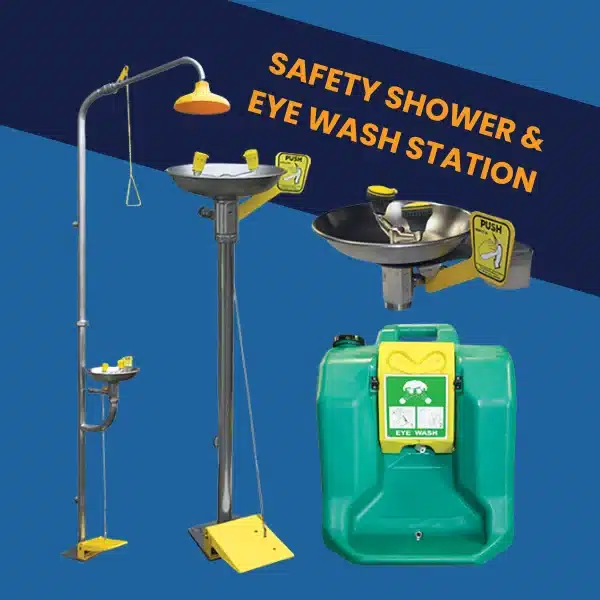
Ecospill’s Portable Gravity Eye Wash Station offers a full 15 minute continuous flush using a 55 litre tank and requires no electricity or plumbing. This makes it reliable in locations where power and running water are limited.
For full body decontamination, Ecospill’s Combination Safety Shower and Eye or Face Wash Units offer hands free or foot pedal activation and are made from 316 grade stainless steel to withstand harsh Australian environments.
The Training Gap Nobody Talks About
Many workplaces install compliant safety showers and eye wash stations, maintain them regularly and meet the technical requirements of AS 4775-2007, but still are not fully prepared for an emergency. Equipment is only effective when workers understand how to use it correctly. If a worker cannot immediately locate the nearest eye wash station or safety shower, activate it confidently, keep their eyes open under the water, complete the full 15 minute flush or remove contaminated clothing, the equipment cannot perform its life saving purpose. Teams also need clarity about who calls emergency services, who assists the affected person and who records the incident. If any of these elements are missing, there is a training gap that needs attention.
To assess readiness, consider whether staff can reach the nearest unit within 10 seconds, whether they can activate and use the equipment confidently, whether they understand emergency response roles and whether supervisors know how to complete AS 4775-2007 testing correctly. Any hesitation indicates an opportunity to strengthen training.
Building Emergency Preparedness Into Your Safety Culture
High performing workplaces build emergency response into their daily safety practices. They test equipment weekly, cover equipment locations clearly during site inductions and provide regular refresher training so workers remain confident in using safety showers and eye wash stations. They review pathways, signage and access to ensure the route to each unit is always clear. They also conduct periodic safety conversations so workers regularly revisit the steps involved in an emergency.
Ecospill’s Emergency Shower and Eye Wash Testing Services help workplaces maintain compliance with AS 4775-2007 and create opportunities for ongoing staff engagement in safety.
True compliance is about more than avoiding penalties or passing an audit. It is about knowing that if an incident occurs, your team can respond quickly, safely and effectively. A prepared workplace is one where equipment is functional, workers are trained and emergency procedures are instinctive.
Taking simple proactive steps makes a significant difference. Walk your site and time the distance to an eye wash station. Review maintenance logs. Ask a worker to explain the steps they would take if exposed to hazardous chemicals. These habits strengthen emergency preparedness and help ensure your workplace responds effectively when seconds matter.
When it comes to emergency decontamination, preparation protects people.
For more information about Ecospill’s range of safety showers, eye wash stations and dangerous goods storage solutions, or to arrange professional testing and compliance services, visit ecospill.com.au or call 1300 736 116.