
Emergency Shower & Eyewash Testing Services
Ecospill tests and services emergency showers and eyewash stations to AS 4775:2026 Emergency eyewash and shower equipment. Our technicians check every unit’s flow rate, water temperature, spray pattern, activation, location and signage, make minor repairs on the spot, and give you a written report showing whether each unit complies. Call 1300 736 116 to book.
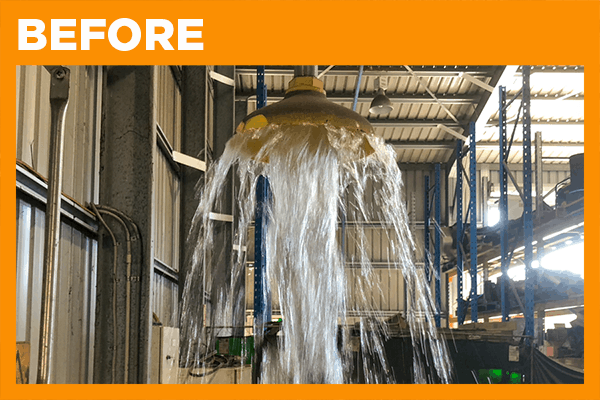
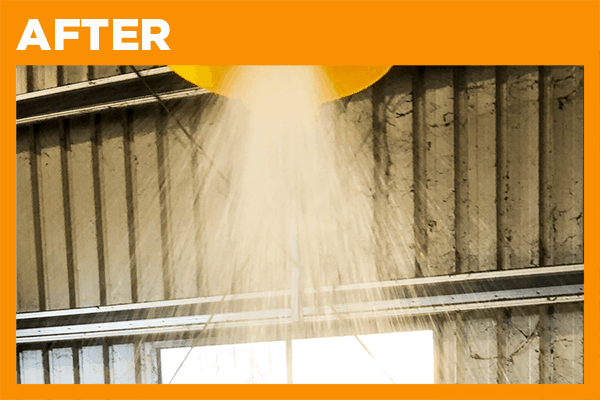
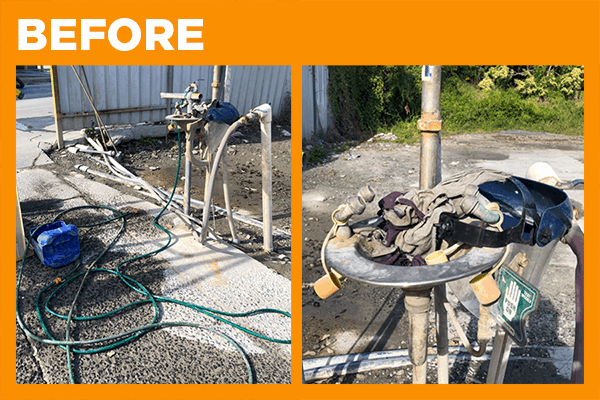
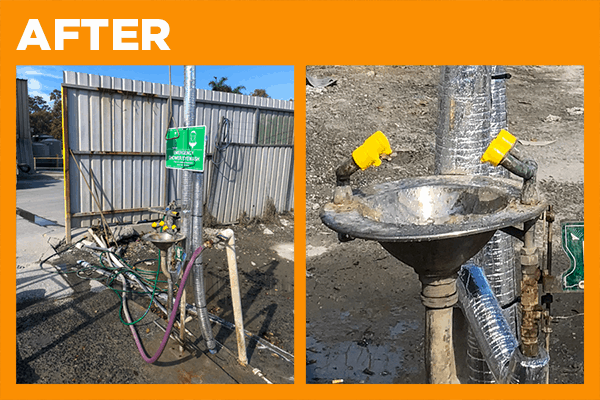
More often than not, the emergency showers and eyewash units we inspect are not compliant with the Australian Standard. Units left untested for long periods become unusable and unsafe. Some don’t activate at all, and others flush brown, rusty water that’s far from eye-saving. The difference between a minor exposure and a serious chemical burn can be just seconds, so if a unit doesn’t work properly, that’s a risk not worth taking.
Why annual inspections matter
AS 4775:2026 expects every emergency shower and eyewash unit to be activated weekly and inspected annually by a competent person. Weekly activation flushes the line and confirms water flows. The annual inspection goes further, measuring performance against the standard and picking up faults that a quick weekly test won’t.
Under WHS laws, businesses must manage the risks of the hazardous chemicals they use, and regular testing of emergency equipment is a key part of that. A documented annual inspection also gives you a clear record for auditors and regulators.
For a plain-English summary of the requirements, see our safety shower Australian Standard checklist.
What’s included in our annual shower and eyewash inspection
- Location and access: the unit is reachable in about 10 seconds, on the same level as the hazard, with a clear path.
- Signage and lighting: the unit is clearly signed and well lit.
- Activation: the valve opens fully in 1 second or less and stays on hands-free.
- Flow rate: showers deliver at least 75.7 litres per minute, and eyewash streams are even to both eyes.
- Water temperature: water is tepid, ideally 15–25°C, including on outdoor units in summer.
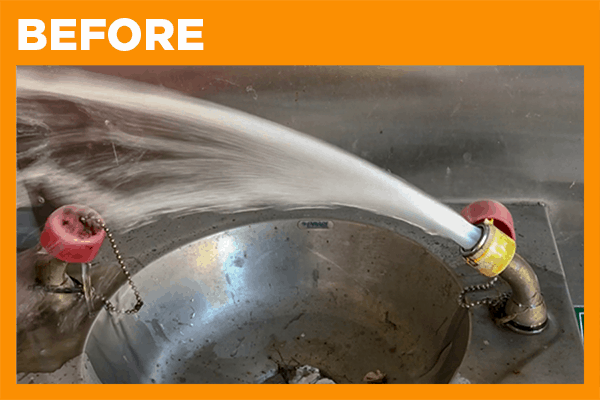
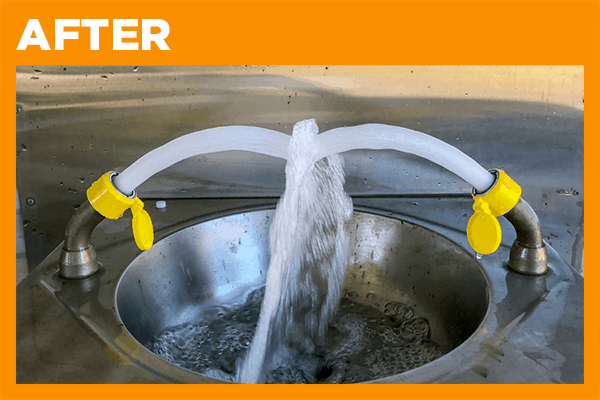
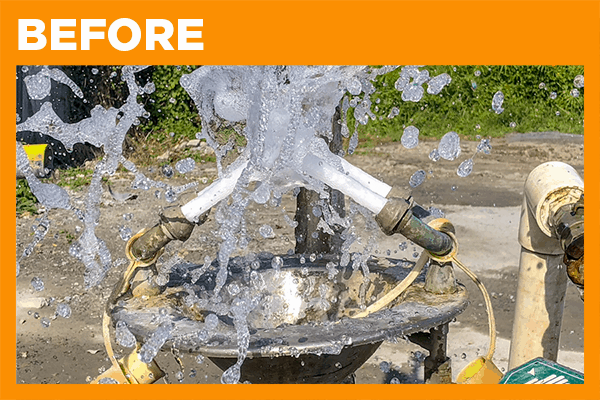
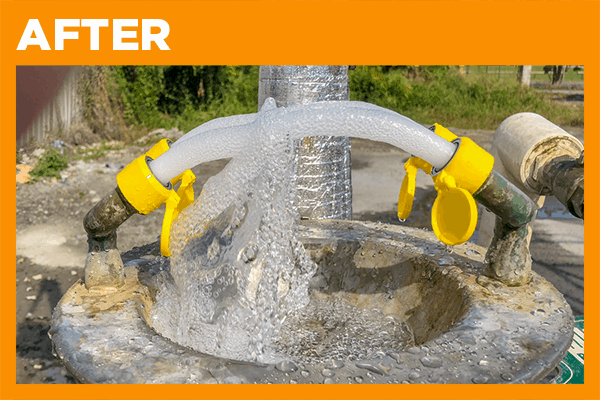
- Spray pattern: the shower covers the whole body, and the eyewash flow is soft and aerated.
- Condition: we check for wear, corrosion, leaks, missing dust covers and damaged nozzles.
Each unit’s results are recorded, and you receive a detailed report of its conformance or non-conformance with the standard. Most minor repairs and adjustments, such as replacing dust covers, aerators and shower heads or adjusting water pressure, can be done at the inspection. Major repairs or replacement units can be planned for a return visit.
Real-life examples from our inspections
|
|
|
|
|
|
|
|
Between inspections: weekly testing
Keep your units in good shape between annual inspections by activating each one weekly and recording the check. Our weekly shower test kit captures the water so you can test without flooding the floor. If a unit needs replacing, browse our combination safety showers and eyewash units, or read our guide to emergency showers and eyewash stations.
Book your annual shower and eyewash inspection
Equipment that’s never tested is equipment you can’t rely on. Ecospill’s testing service makes sure your emergency showers and eyewash stations are inspected, tested and documented, so when an incident happens, your team is protected and your compliance records are in order.
Call 1300 736 116 or contact us to book.