
Emergency Shower & Eyewash Testing Services
Be ready when every second counts.
A chemical splash can happen without warning, in a matter of seconds.
When a worker’s eyes or face are exposed to a hazardous liquid, emergency eyewash equipment needs to be accessible, suitable for the risk and ready to operate immediately.
Ecospill supplies emergency eyewash stations and can help with equipment selection, onsite testing, workplace assessments and spill response training.
Contact the EcoSpill team Shop Eyewash Stations
Eyewash Equipment for Australian Worksites
Different work areas require different emergency response equipment.
A wall-mounted unit may suit a laboratory or chemical handling area and a pedestal unit might be a better option for a workshop or manufacturing facility. Portable equipment is also available for a remote, temporary or mobile worksite. Ecospill’s range includes:
- Wall-mounted eyewash stations
- Eye and face wash units
- Free-standing pedestal units
- Hand and foot-operated models
- Portable emergency eyewash stations
- Combination emergency shower and eyewash units
Not sure which unit suits your workplace? Ecospill can discuss your hazardous liquids, work area, water supply and exposure risks before you purchase.
Eyewash Station Testing and Maintenance
Already have emergency eyewash equipment onsite?
Don’t wait until an incident to find out that a unit is blocked, damaged, difficult to access or not operating correctly.
Ecospill can visit your workplace to inspect and test existing eyewash stations. Our team can identify visible equipment issues and provide advice on condition, location and site readiness. Inspections include:
- Access and equipment location
- Signs and visibility
- Activation controls
- Water flow and operation
- Cleanliness and protective covers
- Leaks, damage or deterioration
- Changes to nearby chemicals or work activities
Our testing and service maintenance reflects the relevant Australian Standards and your site-specific risk controls to keep your business compliant and your workers safer.
Enquire about an Assessment Call 1300 736 116
Does Your Workplace Have the Right Equipment?
Emergency eyewash requirements should be based on the actual risks at your site. Ecospill considers:
- The hazardous chemicals being stored or handled
- First aid instructions in the relevant SDS
- Where splashes or transfer failures could occur
- If the eyes, face or body could be exposed
- How quickly workers can reach the equipment
- If the station can be activated with restricted vision
- Water supply, drainage and surrounding conditions
- Inspection, maintenance and worker training
Common risk areas include laboratories, workshops, manufacturing lines, chemical stores, battery charging areas, cleaning chemical rooms, refuelling points and agricultural chemical mixing zones.
A Workplace Spill Assessment from Ecospill can help identify hazardous liquid hot zones, unsuitable equipment locations and gaps in your emergency response resources.
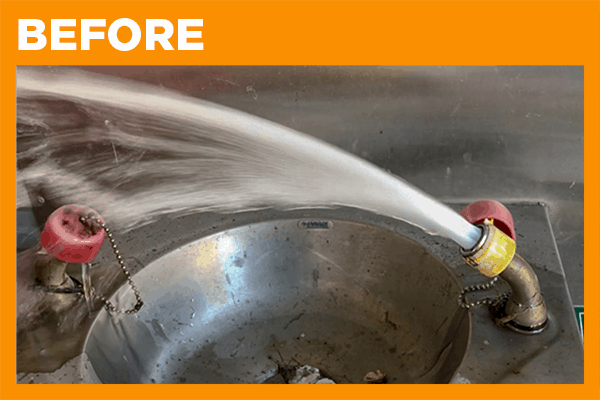
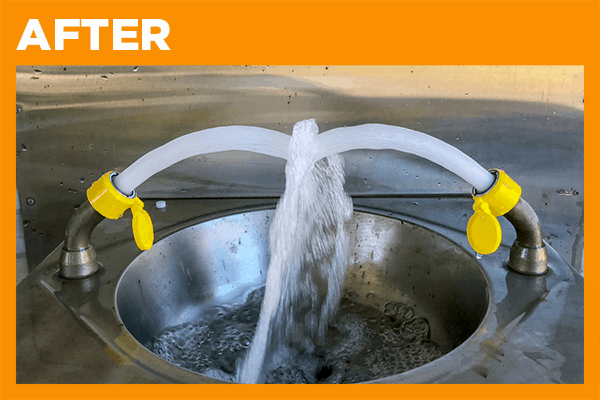
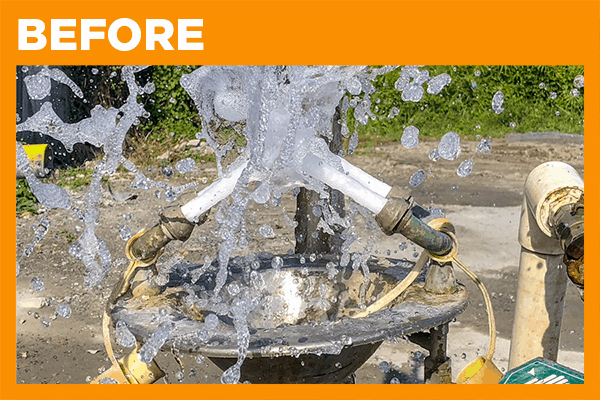
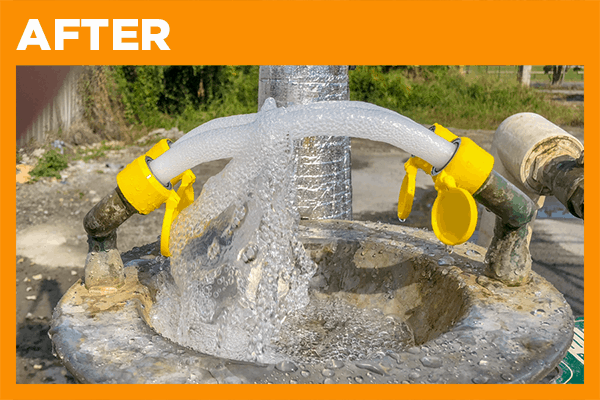
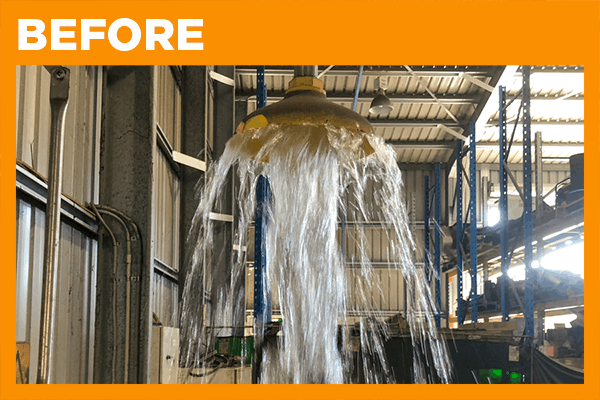
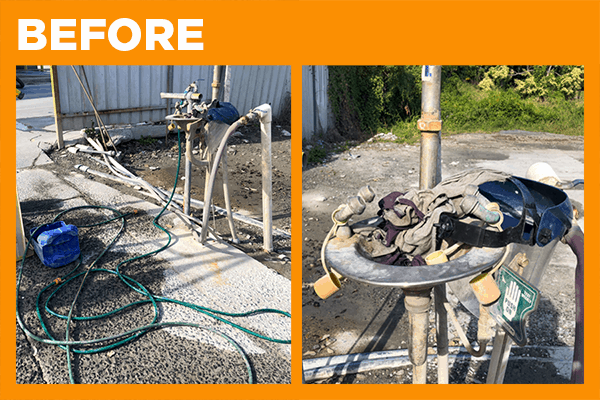
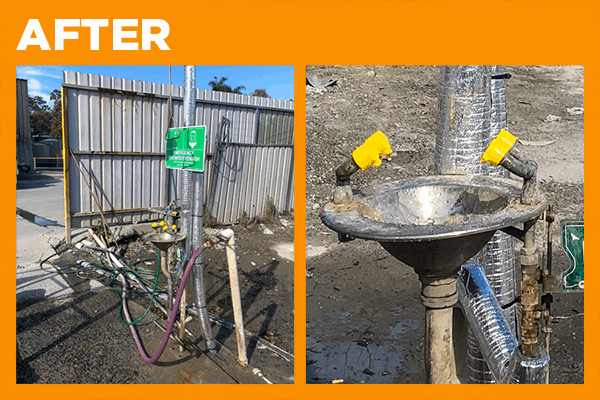
Real Life Examples from our Annual Shower & Eye Wash Testing Inspections:
|
|
|
|
|

|
|
|
Choosing the Right Emergency Eyewash Equipment
Different work areas require different types of emergency equipment.
Plumbed Eyewash Stations
Plumbed units provide a continuous water supply and may be suitable for permanent chemical handling locations, including laboratories, workshops, processing areas, manufacturing lines and chemical transfer points.
Options include wall-mounted and free-standing pedestal units.
Eye and Face Wash Stations
An eye and face wash unit provides broader coverage than an eyewash-only model. It may be considered where hazardous liquids could contact both the eyes and surrounding facial area.
Portable Eyewash Stations
Portable or self-contained units may assist at temporary, mobile and remote worksites where a permanent plumbed supply is not reasonably available.
Portable equipment still needs to be selected for the site risk, positioned where it can be reached and maintained according to the manufacturer’s instructions and relevant guidance.
Combination Emergency Shower and Eyewash Units
A combination unit may be suitable where an incident could expose both the worker’s eyes and body.
These units are commonly considered around corrosive chemical handling, bulk liquid transfer, chemical processing and other higher-risk work areas.
Bottled Eyewash
Bottled eyewash may provide supplementary first aid support in some workplaces. *This should not automatically be treated as a replacement for an appropriate emergency eyewash station or safety shower where a higher level of flushing equipment is required.
Equipment Is Only Part of the Response
An eyewash station is only useful when workers know where it is and how to use it. Ecospill provides Spill Response Training, Hazardous Spill Training and Spill Management programs for workers, supervisors and emergency response teams. Training covers:
- Eyewash and safety shower locations
- How to activate the equipment
- How to assist a worker with restricted vision
- Relevant SDS first aid instructions
- Escalation to first aiders or emergency services
- Incident reporting and investigation
Training can be delivered online, onsite or through a hybrid format, depending on your workforce and site requirements.
Choosing the Right Emergency Eyewash Equipment
Different work areas require different types of emergency equipment.
Plumbed Eyewash Stations
Plumbed units provide a continuous water supply and may be suitable for permanent chemical handling locations, including laboratories, workshops, processing areas, manufacturing lines and chemical transfer points.
Options include wall-mounted and free-standing pedestal units.
Eye and Face Wash Stations
An eye and face wash unit provides broader coverage than an eyewash-only model. It may be considered where hazardous liquids could contact both the eyes and surrounding facial area.
Portable Eyewash Stations
Portable or self-contained units may assist at temporary, mobile and remote worksites where a permanent plumbed supply is not reasonably available.
Portable equipment still needs to be selected for the site risk, positioned where it can be reached and maintained according to the manufacturer’s instructions and relevant guidance.
Combination Emergency Shower and Eyewash Units
A combination unit may be suitable where an incident could expose both the worker’s eyes and body.
These units are commonly considered around corrosive chemical handling, bulk liquid transfer, chemical processing and other higher-risk work areas.
Bottled Eyewash
Bottled eyewash may provide supplementary first aid support in some workplaces. *This should not automatically be treated as a replacement for an appropriate emergency eyewash station or safety shower where a higher level of flushing equipment is required.
Equipment Is Only Part of the Response
An eyewash station is only useful when workers know where it is and how to use it. Ecospill provides Spill Response Training, Hazardous Spill Training and Spill Management programs for workers, supervisors and emergency response teams. Training covers:
- Eyewash and safety shower locations
- How to activate the equipment
- How to assist a worker with restricted vision
- Relevant SDS first aid instructions
- Escalation to first aiders or emergency services
- Incident reporting and investigation
Training can be delivered online, onsite or through a hybrid format, depending on your workforce and site requirements.
Shop Emergency Shower and Eyewash Equipment
Ready to purchase equipment?
Browse Ecospill’s range of wall-mounted, pedestal, portable and eye and face wash units for laboratories, workshops, manufacturing facilities, construction sites and industrial workplaces.
View Emergency Shower & Eyewash Units
Need help choosing before you order?
Equip the Site. Keep Compliant. Train the Team.
Emergency eyewash stations form part of a workplace response system that should include clear emergency procedures and response training and where needed, PPE, accessible SDS, spill kits, absorbents, safety cabinets and bunding.
Ecospill is your partner in spill compliance, helping you review the risks, inspect existing equipment, select suitable products and improve worker readiness.