
3 Steps to Dispose of a Contaminated Spill Kit
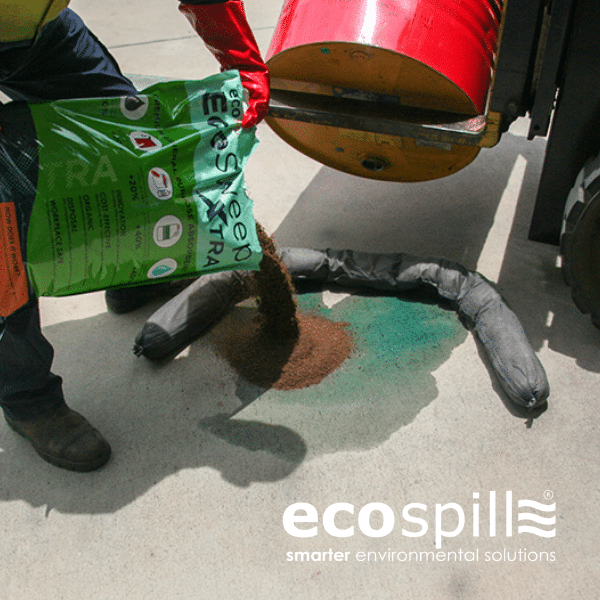
When you use high-performance absorbents like EcoSweep XTRA, TRAX, or EcoSORB, the clean-up is fast and efficient. However, once the spill is contained, a critical question remains: How do you legally and safely dispose of the used waste?
While our natural organic and mineral absorbents are designed to be eco-friendly, ultimately the responsibility for waste management rests with the user. Here is the our guide to staying compliant and protecting the environment, with 3 steps to dispose of a contaminated spill kit below.
Contamination Changes Everything
In their unused state, Ecospill absorbents pass the USEPA 9095A test, meaning they are technically suitable for landfill in small quantities. However, as soon as an absorbent is used to clean up a spill, it takes on the hazardous properties of the liquid it absorbed.
Think of the absorbent as the ‘vehicle’ and the spilled liquid as the ‘passenger.’ If you soak up a hazardous hydrocarbon or a corrosive chemical, the entire waste mass must now be treated as a hazardous substance.
3 Steps to Dispose of a Contaminated Spill Kit
To make sure your facility meets Australian industrial and environmental standards, here is how to dispose of contaminated Spill Kit Waste in 3 steps:
1. Consult the SDS of the Spilled Substance
Before disposal, you must refer to the Safety Data Sheet (SDS) of the specific liquid that was cleaned up. The SDS will provide the legal guidance on whether landfill disposal is appropriate or if specialist hazardous waste disposal is required.
2. Check Local Government Regulations
There is no single blanket rule for waste disposal across Australia. Disposal requirements vary significantly between states, territories, and local council areas. It is mandatory to adhere to your local municipal requirements.
3. Confirm Waste Volume Limits
While small quantities of general hydrocarbons might be accepted in some landfill areas, larger ‘trade waste’ volumes often require specialised handling.
Duty of Care
The ultimate responsibility for the proper disposal of contaminated trade waste rests with the end user, whether you are an individual, a company or an incorporated entity. Failure to dispose of contaminated waste correctly can lead to significant environmental fines and legal liabilities.
Make sure your team has the facts.
Download the Official Guidance Statement
Download the official Ecospill Technical Bulletin on the Disposal of Contaminated Trade Waste to include in your site’s safety folders.
